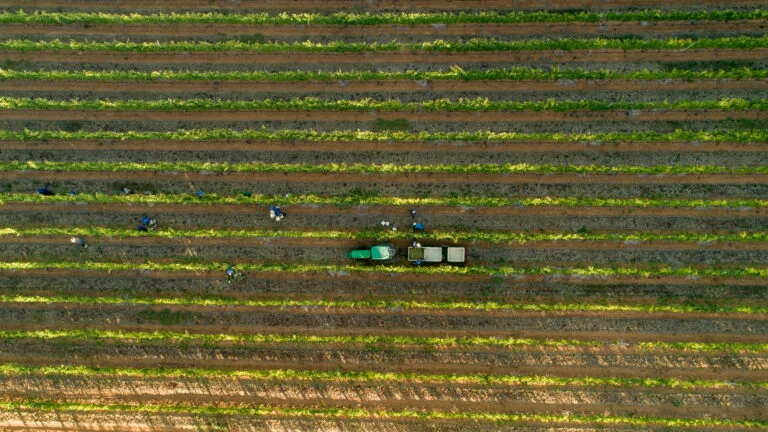
Great wine starts long before the grapes reach the cellar, with the health of the vineyard and the soil that supports it.
Soil has always shaped vine health, fruit quality and the character of a vineyard. As weather patterns become less predictable, it is also becoming one of the most important long term business assets on a farm. Healthy soil helps vineyards manage heat, limited rainfall, drought cycles and seasonal stress more effectively.
Across the world, wine regions are adapting their farming practices to meet changing conditions. Some producers are exploring drought tolerant rootstocks, new cultivars, higher altitude sites, shade management, cover crops and more efficient irrigation.
South African producers have long farmed with heat, wind and limited water, and the growing frequency and intensity of these pressures is making soil and water management an even greater priority.
Healthy soil supports the vine in several ways. Good soil structure helps water move through the profile and reduces runoff during heavy rain. Organic matter helps retain moisture during dry periods. Microbial activity supports nutrient cycling, while deeper root development gives vines a better chance of coping with stress.
These factors have a direct effect on vineyard performance. They influence yield stability, fruit concentration, input costs, vineyard longevity and the consistency needed for premium wine production.
“Every decision made in the vineyard carries forward into the wine,” says Karl Lambour, General Manager at Tokara Wine and Olive Estate. “Soil health influences how the vine grows, how it responds to heat or water stress, and ultimately the quality of the fruit we bring into the cellar. It is one of the most important long term investments a producer can make.”
Soil also plays a role in the wine’s final profile. Too much water can lead to excessive vine growth and dilute concentration. Too little water, or stress at the wrong time, can affect berry development, acidity, tannin and flavour. When soil is well managed, vines have a more stable environment in which to ripen fruit with balance.
“People often speak about terroir as something romantic, but it is also very practical,” says Lambour. “The character of a wine is shaped by the site, and soil is a key part of that site. If we want wines that show identity and consistency, we have to protect the systems that allow that expression to come through.”
This means investing in practices such as cover crops, composting, mulching, careful irrigation scheduling, erosion control, biodiversity management and regular vineyard monitoring.
The farms that treat soil as a living business asset will be better placed to protect their vineyards, their wine quality and their long term place in the market.