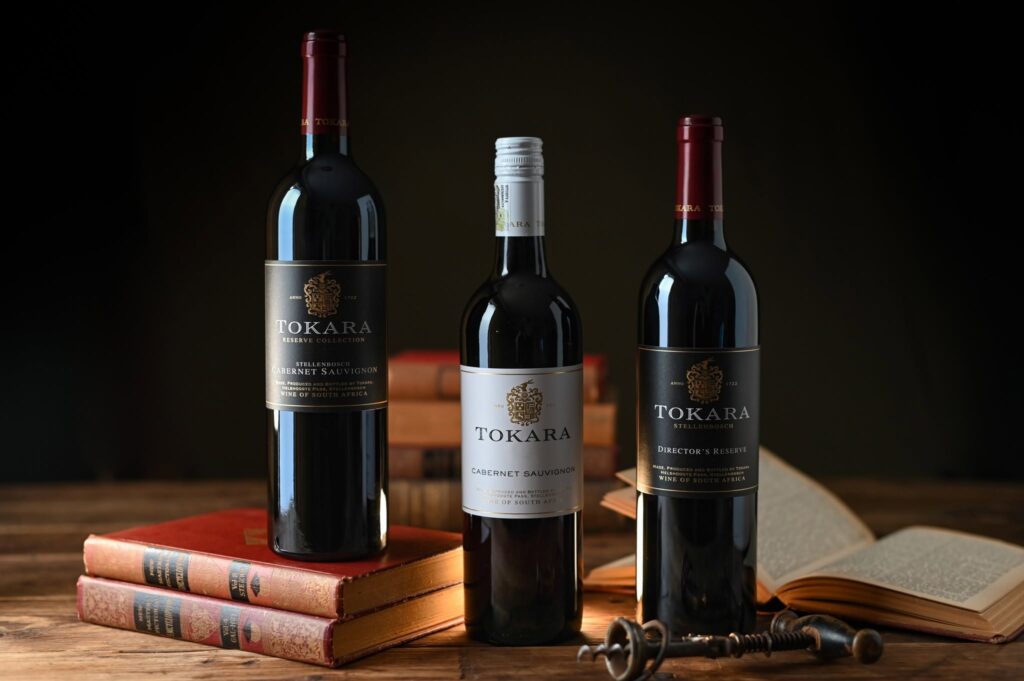
Ask what Cabernet Sauvignon means at Tokara and the answer depends on exactly where you’re standing. Same grape, same mountain — and yet the estate has found five genuinely different things to do with it, shaped by what’s underneath the vines, what gets blended in, and how much the winemaker is willing to ask of a single bottle.
Start with the easy one. Tokara Cabernet Sauvignon is fruit-forward and unfussy — open it on a Tuesday, open it for a table of eight, it doesn’t much matter. Nobody’s studying this wine, and it isn’t trying to be studied. Move one step up and the mood changes: the Reserve Collection Cabernet Sauvignon wants time. Layered rather than immediate, it opens slowly in the glass instead of announcing itself all at once, and lately it’s been getting noticed for exactly that patience. The 2022 vintage made the red-wine finalists at the Judgement of Davis — fifty years on from the Judgement of Paris that upended the wine world the first time — and it’s the only South African red on this year’s World’s Best Sommeliers’ Selection. Decanter gave it Gold. Quite a lot of recognition, arriving quickly, for a wine built around slowing down.
From here Cabernet’s role at Tokara stops being confined to wines that carry its name. Director’s Reserve Red isn’t technically a Cabernet Sauvignon — it’s a Bordeaux-style blend built around Cabernet, with the estate’s other varieties added for dimension, not competition. Of the five, it’s the one built to sit in a cellar for years rather than open tonight. Then there’s Simonsberg Cabernet Sauvignon, grown on parcels where the soil carries more granite gravel, which pushes the vines toward smaller berries and denser fruit. Tokara makes less of this one than any of the other four, and it tastes like it: restrained power, real elegance, a wine that says less about the grape in general and more about this one hillside in particular.
And then, Telos. It’s the most ambitious Cabernet Sauvignon Tokara makes, and arguably the reason the other four exist. The Ferreira family built it around a single rule — only the best fruit the estate produces in a given year goes into the bottle, nothing else — which means it was never going to taste the same twice. A 2015 bears almost no resemblance to a 2019; the drought years show up in the glass the way they showed up in the vineyard. We put five vintages side by side at our first Telos vertical tasting earlier this year, and that’s precisely what came through: five different wines, one unmoving standard behind all of them. The other four wines show what this mountain can do with Cabernet. Telos shows what happens when you refuse to settle for anything less than the best of it.